
Artificial intelligence is advancing faster than ever, and GPT-5 is at the forefront of this transformation. Its impact on AI is already being felt across industries, from research labs to businesses seeking smarter automation. Unlike previous versions, GPT-5 brings unprecedented natural language understanding, multimodal capabilities, and efficiency that open up new possibilities for AI applications. In this article, we’ll explore how GPT-5 is changing the AI landscape, what it means for developers and businesses, and why its influence will shape the future of technology.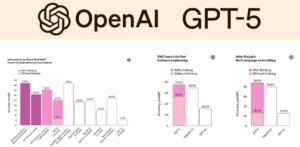
For years, AI models have evolved gradually, but GPT-5 introduces leaps in reasoning, context understanding, and creative problem-solving. Companies are already leveraging these improvements for tasks that previously required human intervention, such as content generation, code writing, customer service, and predictive analytics. If you’ve ever wondered how GPT-5 compares to GPT-4 or what the real-world applications are, this guide provides clarity, practical examples, and insights into the future of artificial intelligence.
Introduction to GPT-5
GPT-5 is the latest iteration of OpenAI’s Generative Pre-trained Transformer series. It is designed to understand and generate human-like text with remarkable accuracy. Unlike GPT-4, GPT-5 can process larger datasets, handle more complex instructions, and respond with greater contextual awareness. This evolution makes it a key player in shaping the capabilities of AI systems worldwide.
What GPT-5 Is
At its core, GPT-5 is a deep learning model trained on a vast amount of text from the internet. Its neural network architecture allows it to predict and generate text, answer questions, and even perform tasks across multiple domains. The model’s ability to process information at scale makes it suitable for applications ranging from chatbots to automated content creation and research assistance.
Brief History of GPT Models
The journey of GPT models started with GPT-1, which demonstrated the potential of transformers in natural language processing. GPT-2 expanded this capability, generating coherent paragraphs that surprised the AI community. GPT-3 became a household name due to its high-quality text generation, powering tools, apps, and even coding assistants. GPT-4 improved reasoning and multimodal functionality, and now GPT-5 takes this evolution further with speed, accuracy, and broader understanding, setting a new benchmark for AI language models.
Key Features and Capabilities of GPT-5
Enhanced Natural Language Understanding
GPT-5’s natural language understanding allows it to comprehend subtle nuances in text, such as context, tone, and implied meaning. This improvement enables it to generate highly relevant and coherent responses. Businesses use GPT-5 for drafting emails, creating marketing content, and even assisting with customer queries without losing the human touch.
Multimodal Abilities
One of the standout features of GPT-5 is its multimodal functionality. Unlike earlier versions, it can process not just text but also images and data inputs, allowing for richer interactions. For instance, a researcher can input a chart or graph, and GPT-5 can provide insights or summarize the information, bridging the gap between text and visual content.
Speed and Efficiency Enhancements
Efficiency is another area where GPT-5 excels. The model processes complex queries faster, reducing lag times in applications such as AI-driven customer service or content generation platforms. This speed is critical for businesses that rely on AI to deliver real-time solutions or analyze large datasets quickly.
GPT-5 vs GPT-4: Major Differences
Accuracy and Reasoning
GPT-5 outperforms GPT-4 in accuracy and logical reasoning. While GPT-4 was already impressive, GPT-5 can handle more nuanced queries, make fewer mistakes, and provide deeper insights. For example, GPT-5 can summarize technical research papers or generate reports with minimal human editing.
Dataset and Training Improvements
The model’s training includes a more diverse and expansive dataset, covering updated information from multiple sources. This improvement ensures GPT-5 understands current events, recent technologies, and industry-specific terminology better than its predecessors. As a result, its output is not only coherent but also relevant and timely.
Practical Applications
Comparing GPT-5 and GPT-4 shows how practical applications have expanded. GPT-5 is already used in:
- AI-powered content creation and summarization for websites and blogs
- Advanced coding assistants that help developers debug and write code
- Chatbots capable of nuanced customer interactions in banking, e-commerce, and healthcare
- Data analysis tools that interpret charts, reports, and technical documents
These applications highlight GPT-5’s transformative effect on how AI is integrated into everyday workflows, making tasks faster, more accurate, and more scalable.
Real-World Applications of GPT-5
AI in Business and Automation
Businesses are adopting GPT-5 for automation to improve productivity and reduce operational costs. For example, AI-driven customer service platforms powered by GPT-5 can handle thousands of queries simultaneously, providing accurate responses and freeing human employees for more strategic tasks. Marketing teams also leverage GPT-5 to generate persuasive copy, social media posts, and product descriptions that resonate with audiences.
AI in Education and Research
Educators and researchers benefit from GPT-5’s ability to summarize information, generate study materials, and provide detailed explanations of complex topics. Students can use AI to get step-by-step guidance in coding, writing essays, or understanding advanced scientific concepts. Universities are experimenting with GPT-5 to accelerate research, such as drafting papers or analyzing datasets for insights.
Healthcare and Other Industries
In healthcare, GPT-5 assists in drafting medical reports, summarizing patient histories, and providing insights based on recent research. Its multimodal capabilities can analyze lab results and medical images, offering preliminary interpretations that help doctors focus on decision-making. Industries like finance, logistics, and legal services also use GPT-5 for tasks like contract analysis, fraud detection, and predictive modeling.
For readers wanting to explore related AI infrastructure topics, check intelligent computing centers. If you are interested in how hardware supports AI, AI hardware and chip design are crucial elements. For AI productivity tools, explore AI-powered software.
Ethical Considerations and Challenges
Bias and Fairness in AI
Despite its capabilities, GPT-5 is not immune to bias. Training data can influence outputs, potentially leading to unfair or inaccurate results. Businesses must monitor AI-generated content and implement safeguards to ensure ethical and unbiased applications.
Security Risks and Misinformation
GPT-5’s text generation ability can also be misused for spreading misinformation or generating phishing content. Security protocols and careful supervision are necessary to mitigate these risks. Developers and organizations need to balance AI innovation with responsibility.
Regulatory Landscape
Governments and regulatory bodies are increasingly focusing on AI standards. Compliance with data privacy laws, transparency in AI outputs, and ethical usage policies are essential. Understanding the legal landscape ensures GPT-5 deployments remain responsible and sustainable.
Future Implications for AI
How GPT-5 Shapes AI Research
GPT-5 is accelerating AI research by providing tools that can analyze data, draft papers, and simulate experiments. Researchers no longer need to spend hours summarizing literature or coding repetitive tasks, as GPT-5 can generate accurate summaries and propose insights. This allows scientists and developers to focus on innovation rather than mundane tasks.
Generative AI and Innovation Trends
Generative AI, led by models like GPT-5, is reshaping industries. In marketing, AI-generated content can target specific audiences with minimal human intervention. In software development, GPT-5 assists in debugging code or even creating entire scripts. This trend points toward an era where AI collaborates closely with humans, enhancing creativity, productivity, and efficiency.
Predictions for AI Adoption
Experts predict that GPT-5 and similar models will see rapid adoption across enterprises, education, and healthcare. Businesses using GPT-5 can scale operations faster, while educational institutions leverage AI to improve learning outcomes. Healthcare providers benefit from AI-assisted diagnostics and research. The widespread adoption of GPT-5 will likely push industries to adapt policies, invest in AI infrastructure, and train personnel for human-AI collaboration.
Internal Linking Opportunities
For insights into AI infrastructure that supports these advancements, check intelligent computing centers. For those interested in AI-powered applications and productivity, explore AI-powered software.
Real-Life Examples of GPT-5 Impact
- Customer Support Automation: A major e-commerce platform uses GPT-5 to handle over 80% of customer queries without human intervention, improving response times and satisfaction.
- Content Generation: Marketing agencies leverage GPT-5 to draft blog posts, product descriptions, and social media campaigns in minutes, cutting down production time drastically.
- Healthcare Insights: Hospitals use GPT-5 to summarize patient histories and medical research, allowing doctors to make informed decisions faster.
- Education: Online learning platforms integrate GPT-5 to provide personalized tutoring, generate exercises, and assist with grading.
Helpful Tips for Using GPT-5 Effectively
- Define Clear Prompts: The clearer your instructions, the more accurate GPT-5 outputs will be.
- Combine Human Oversight: Use AI suggestions but verify them to avoid errors or bias.
- Use Multimodal Inputs: Leverage images, charts, or data alongside text for richer insights.
- Monitor Bias: Regularly check outputs to ensure fairness and inclusivity.
- Integrate Incrementally: Start with specific tasks before scaling GPT-5 to multiple operations.
GPT-5 vs GPT-4: Comparison Table
| Feature | GPT-4 | GPT-5 |
|---|---|---|
| Language Understanding | Advanced | Superior, nuanced context comprehension |
| Multimodal Capability | Limited | Text, image, and data inputs |
| Processing Speed | Fast | Faster, optimized for real-time applications |
| Training Dataset | Large | Larger, more diverse, up-to-date |
| Accuracy and Reasoning | High | Higher, improved logic and fewer errors |
| Applications | Content, code, analysis | Expanded: research, healthcare, education, business automation |
Frequently Asked Questions (FAQ)
1. What is GPT-5?
GPT-5 is OpenAI’s latest AI language model designed to understand and generate text with advanced reasoning, multimodal capabilities, and high accuracy.
2. How is GPT-5 different from GPT-4?
GPT-5 offers better context understanding, supports images and data inputs, processes tasks faster, and uses a larger, more diverse dataset than GPT-4.
3. Can GPT-5 replace human workers?
No, GPT-5 assists humans by automating tasks and providing insights, but human oversight is essential for accuracy, creativity, and ethical use.
4. What industries benefit most from GPT-5?
Healthcare, education, research, marketing, software development, and customer service are among the top industries leveraging GPT-5.
5. Is GPT-5 biased?
GPT-5 can inherit biases from its training data. Monitoring outputs and applying safeguards ensures ethical and fair use.
6. How can businesses integrate GPT-5?
Start by automating specific tasks like content generation or customer support, gradually expanding to larger operations with human oversight.
7. Is GPT-5 safe to use?
Yes, when used responsibly with monitoring for misinformation and bias, GPT-5 is a safe and powerful AI tool.
Final Thoughts
GPT-5 is transforming artificial intelligence by providing advanced reasoning, multimodal processing, and faster, more accurate outputs. Its applications span business, education, healthcare, and research, making it an indispensable tool for innovation. By combining GPT-5’s capabilities with human oversight, organizations can unlock efficiency, creativity, and smarter decision-making.
While ethical challenges and risks exist, proper monitoring, transparency, and regulation ensure GPT-5 is used responsibly. Its influence on AI research, generative applications, and industry adoption will continue to grow, marking a new era in artificial intelligence.
For further insights into AI infrastructure supporting GPT-5, visit intelligent computing centers, and for tools powered by AI, check AI-powered software. To learn about the hardware enabling AI advancements, explore AI hardware and chip design.
Authoritative sources for GPT-5 updates and research include OpenAI’s official page and Wikipedia – GPT-5.